
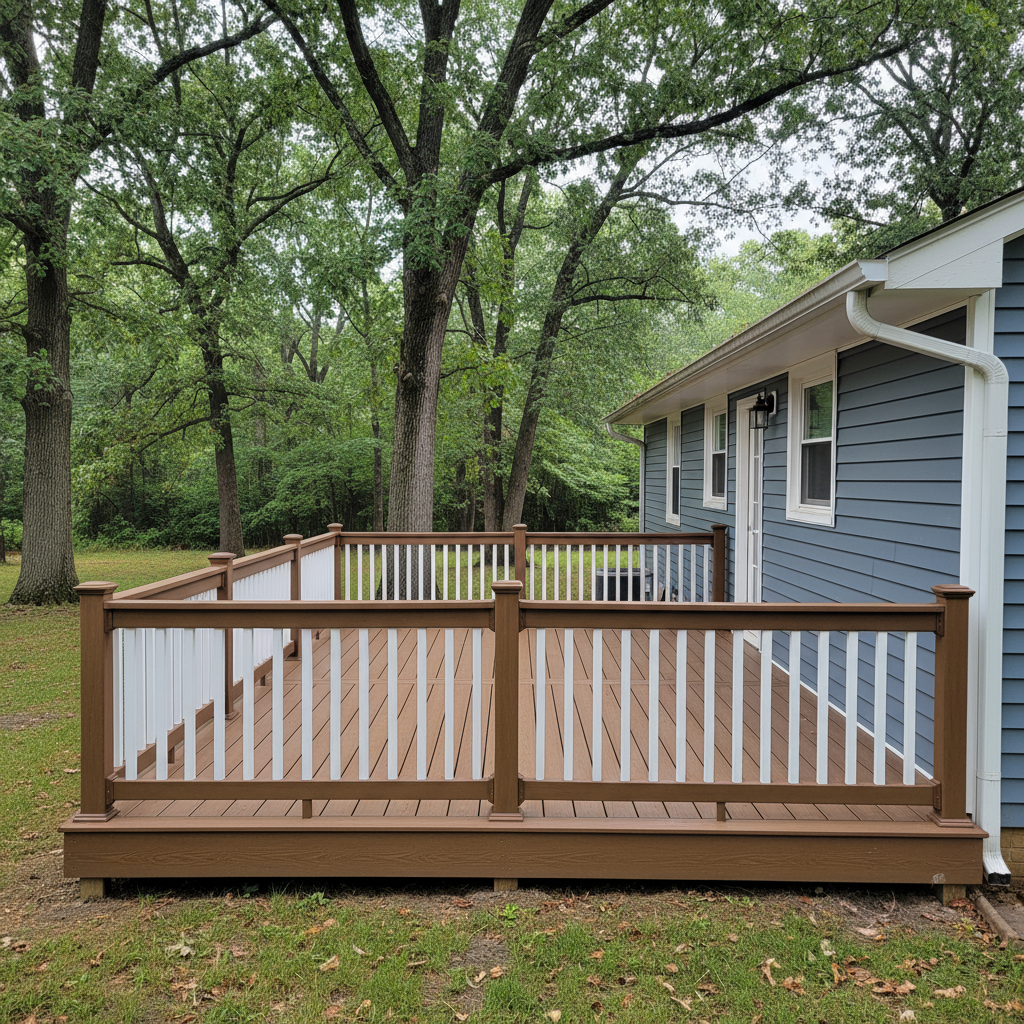
Three bids come in on the same deck and they're $4,000 apart. That gap isn't the contractor being generous or greedy. It's usually the difference between a deck built to actually hold up here and one that's built to look finished on the day you pay the final invoice. Pulaski County clay doesn't care which contractor has the nicer truck wrap.
This isn't a sales pitch for one way of doing things. It's what to ask about and what to look at before you sign anything, whether the job is a full rebuild, a new addition off the back of the house, or just replacing boards that have gone soft.
What the clay under your yard is doing to the deck
Most of the ground around Jacksonville is heavy clay, sometimes with a layer of fill from when the neighborhood was graded decades ago. Clay swells when it's wet and shrinks when it dries out, and in a wet spring followed by a dry August that movement is real, not theoretical. A footing that's sitting too shallow, or one that's just a bag of concrete dumped in a hole without being sized to the load above it, will heave. You'll see it as a deck that's pulled slightly away from the house, or a post that's gone a half inch out of plumb over two or three years. Footings here need to go below frost depth, which in this part of Arkansas generally means at least 12 inches of solid bearing below grade, more if the soil under that spot is soft or has been disturbed by old utility trenching. Ask any builder bidding your job how deep they're going and what they're resting the footing on. If the answer is vague, that's your answer too.
Permits aren't a formality here, they're what catches the mistakes
Jacksonville requires a building permit for most deck construction, and if your lot falls outside city limits you're dealing with Pulaski County instead. Either way, the process is the same shape: you pull the permit before digging, an inspector checks the footings before concrete goes in, and there's a framing inspection before the decking boards go down covering everything up. That inspection step matters more than people think, because once boards are screwed down nobody's going back to check if the ledger was lagged into the rim joist correctly or just nailed. A builder who tells you permits are optional for a deck this size, or offers to skip the inspection to save you time, is offering to hide the one part of the job you can't check yourself later. If your subdivision has an HOA, which is common in some of the newer streets built out toward Cabot and Austin, add that review to the front of the timeline. Older sections closer to downtown Jacksonville, with houses dating back to when the Air Force base drove a lot of the building in the 50s and 60s, usually don't have HOA covenants to deal with, but they often have older, smaller footings under the house itself that a new deck shouldn't be tied into without checking first.
The part of the deck you can't see is the part that matters most
The ledger board, the board bolted to your house that the whole deck hangs from, fails more decks than rot does. It needs to be lag bolted or through-bolted into the rim joist, not just nailed, and it needs flashing above it so water running off the house doesn't sit against that joint for ten years. Ask whether they're using joist hangers rated for the span, and whether joists are spaced at 16 inches on center for standard decking or tighter if you're going with composite, which usually wants closer spacing to avoid sagging between boards in our summer heat. None of this shows up in a photo of the finished deck. It's also exactly what separates a deck that's still solid in year fifteen from one that starts bouncing underfoot in year five.
Material choice decides your maintenance calendar, not just your budget
Pressure-treated pine is cheaper up front and it's what most of the decks around here are built with. It needs to dry out for 30 to 60 days after installation before you stain or seal it, because wet lumber won't take a sealer properly, and Arkansas humidity through the summer slows that drying time down. After that, plan on restaining every two to three years if the deck gets afternoon sun, longer if it's shaded. Composite costs more going in but doesn't need that staining cycle, though it still needs proper joist spacing underneath and gapping between boards for the swings in humidity we get between January and August. Whoever you hire should be able to tell you the maintenance schedule for whatever material they're recommending, not just the price per square foot.
What to walk away from
A quote with no mention of footing depth or permit cost is a red flag. So is a contractor who wants full payment before any work starts, or who can't tell you how many days until you can walk on new decking without it flexing. A deck framed with undersized joists to save on lumber will usually hold a few people at a cookout just fine, which is exactly how people don't find out there's a problem until the deck is five years old and loaded with a hot tub or a crowd for a holiday. Ask for references from jobs done at least two or three years ago, not last month, because that's long enough for shortcuts to show themselves. Arkansas law requires a license for residential contracting jobs over a certain dollar amount, so ask to see it, and don't take a verbal contract for anything structural. Get the footing depth, the lumber grade, and the permit responsibility in writing before a shovel goes in the ground.
A deck that's built right here handles the clay, the summer humidity, and the freeze-thaw swings we get most winters without needing to be rebuilt in a decade. You can look at our deck builder work around Jacksonville to see what that looks like finished, but the questions above are worth asking any contractor you're considering, not just us.